Language
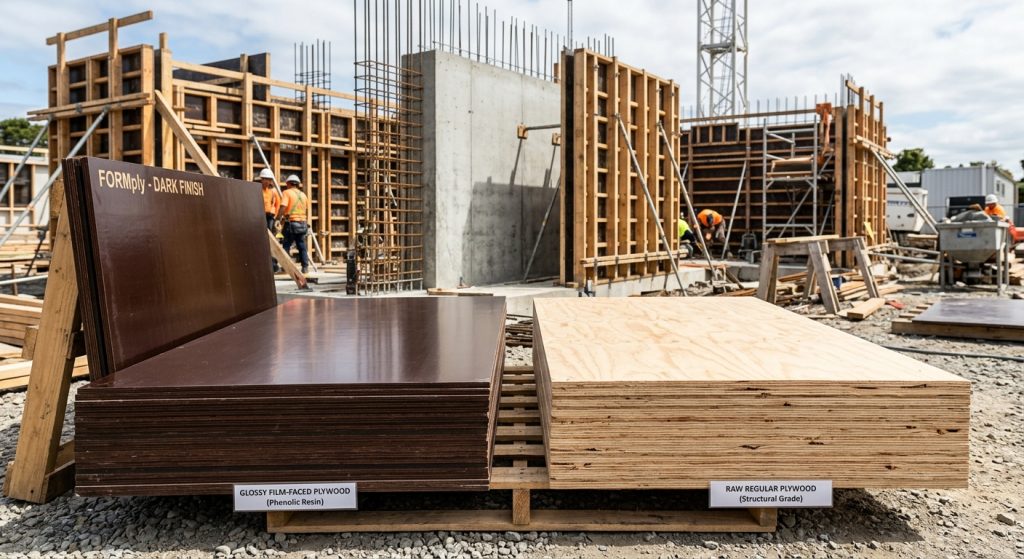
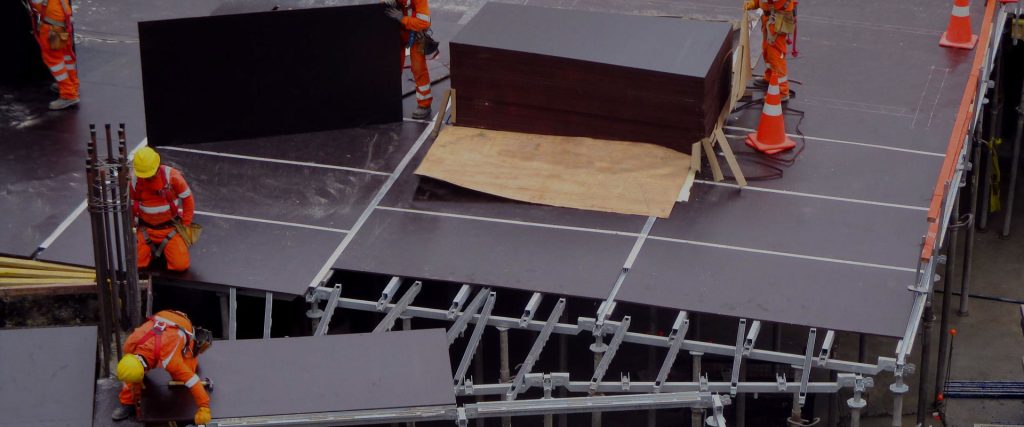
Film-faced plywood wins on total cost for almost every concrete formwork project that involves more than a handful of pours. Yes, it costs roughly 1.5–2× more per sheet than regular plywood — but it survives 40–60 reuse cycles compared to just 5–10, which means your cost per pour can drop by 50–75%. If you are pouring concrete more than a few times, film-faced panels pay for themselves before the third or fourth slab and keep saving you money from there.
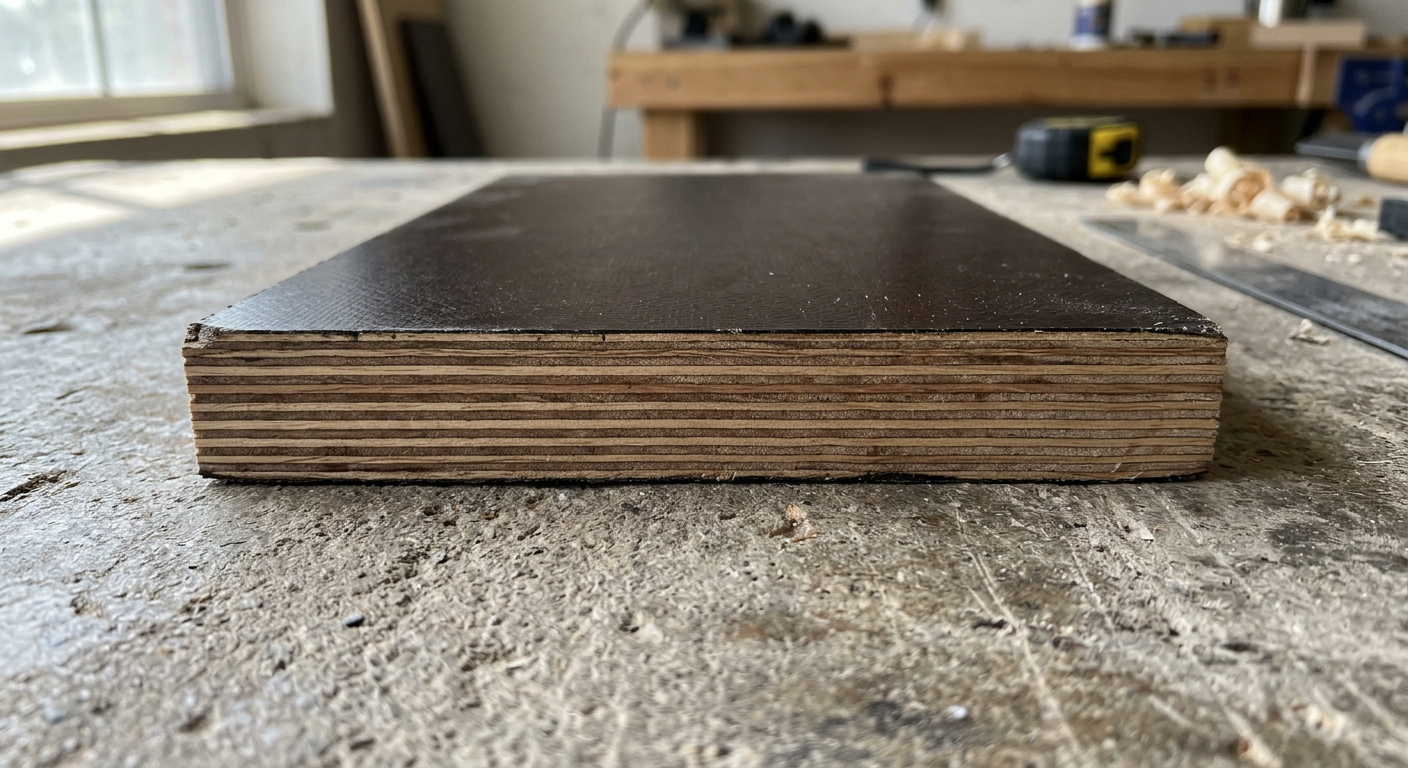
Strip away the marketing language and the difference is simple: a phenolic resin film is heat-pressed onto both faces of the panel. That film — typically 120 g/m² to 220 g/m² — creates a hard, glossy barrier between the wood core and wet concrete.
The phenolic overlay is chemically bonded to the veneer surface at around 135 °C. It resists alkaline attack from fresh concrete (pH 12–13), blocks moisture ingress, and provides a naturally low-friction surface so panels release cleanly without excessive form oil. Regular plywood has none of this. Its raw veneer face absorbs water, swells, and bonds to the concrete — which is why you see surface tearing after just a few pours.
Both panel types can share the same core — poplar, birch, tropical hardwood, or a combination. The critical variable is the glue line. Formwork-grade film-faced plywood uses WBP (weather and boil-proof) phenolic adhesive throughout. Budget regular plywood sometimes uses MR (moisture-resistant) glue that delaminates under sustained wet conditions. If you are comparing panels, always confirm the glue class first. For a deeper look at how core types affect performance, see our guide on different types of ply board and their applications.
Numbers talk louder than adjectives. Here is how the two panels stack up across the criteria that actually affect your formwork budget and schedule:
| Criteria | Film-Faced Plywood | Regular Plywood |
|---|---|---|
| Typical Reuse Cycles | 40–60+ pours | 5–10 pours |
| Unit Price (18 mm, per m²) | $12–$22 | $6–$12 |
| Cost Per Pour (estimated) | $0.25–$0.55 | $0.60–$2.40 |
| Surface Finish on Concrete | Smooth, fair-faced | Rough, requires patching |
| Water Resistance | Excellent (phenolic film) | Moderate (depends on glue) |
| Release Agent Needed | Minimal or none | Required every pour |
| Edge Sealing Required | Recommended | Essential |
| Best Use Case | High-rise, infrastructure, repeat pours | One-off pours, temporary works |
The standout line is cost per pour. Even at the high end of film-faced pricing ($22/m²) and 40 reuses, you land at $0.55 per pour. Regular plywood at $6/m² and 10 reuses costs $0.60 per pour — and that is the best-case scenario for the cheaper panel.
Most buyers fixate on the purchase price printed on the invoice. That is a mistake. Formwork economics are driven by total cost of ownership — panel price, reuse count, labour for stripping and cleaning, release agent consumption, and concrete surface remediation.
Imagine a mid-rise residential project requiring 200 slab pours using 500 m² of formwork per pour. Here is a simplified cost model:
The film-faced option saves roughly $60,000–$70,000 on a project of this scale. Even if you halve the reuse assumptions, the gap remains enormous.
There is one scenario: truly single-use or very-low-reuse applications. Foundation footings poured once in soil, sacrificial forms for irregular shapes, or temporary site structures where appearance is irrelevant. If the panel will never see a second pour, paying double for a film face makes no sense.
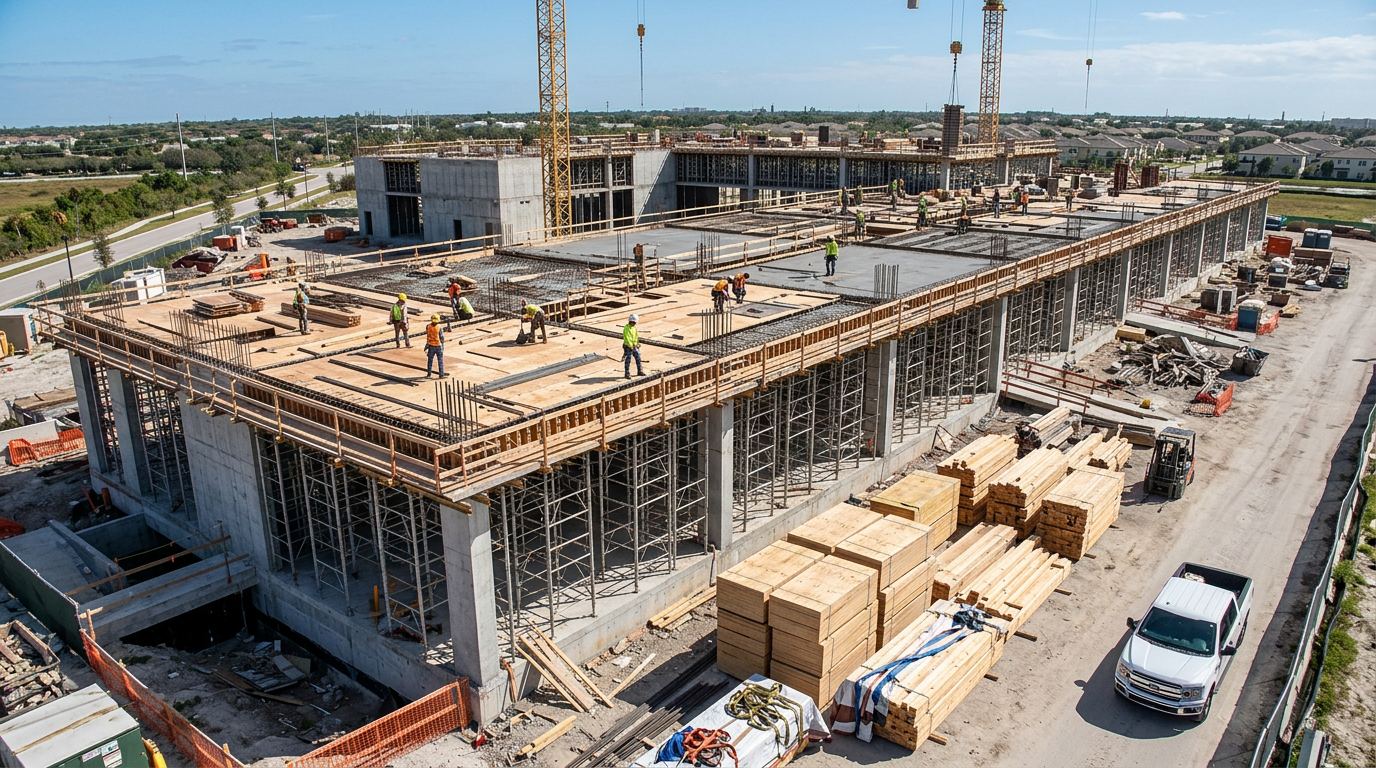
Here is something contractors learn the hard way: the formwork surface is the concrete surface. Every imperfection on your panel transfers directly to the finished wall or slab.
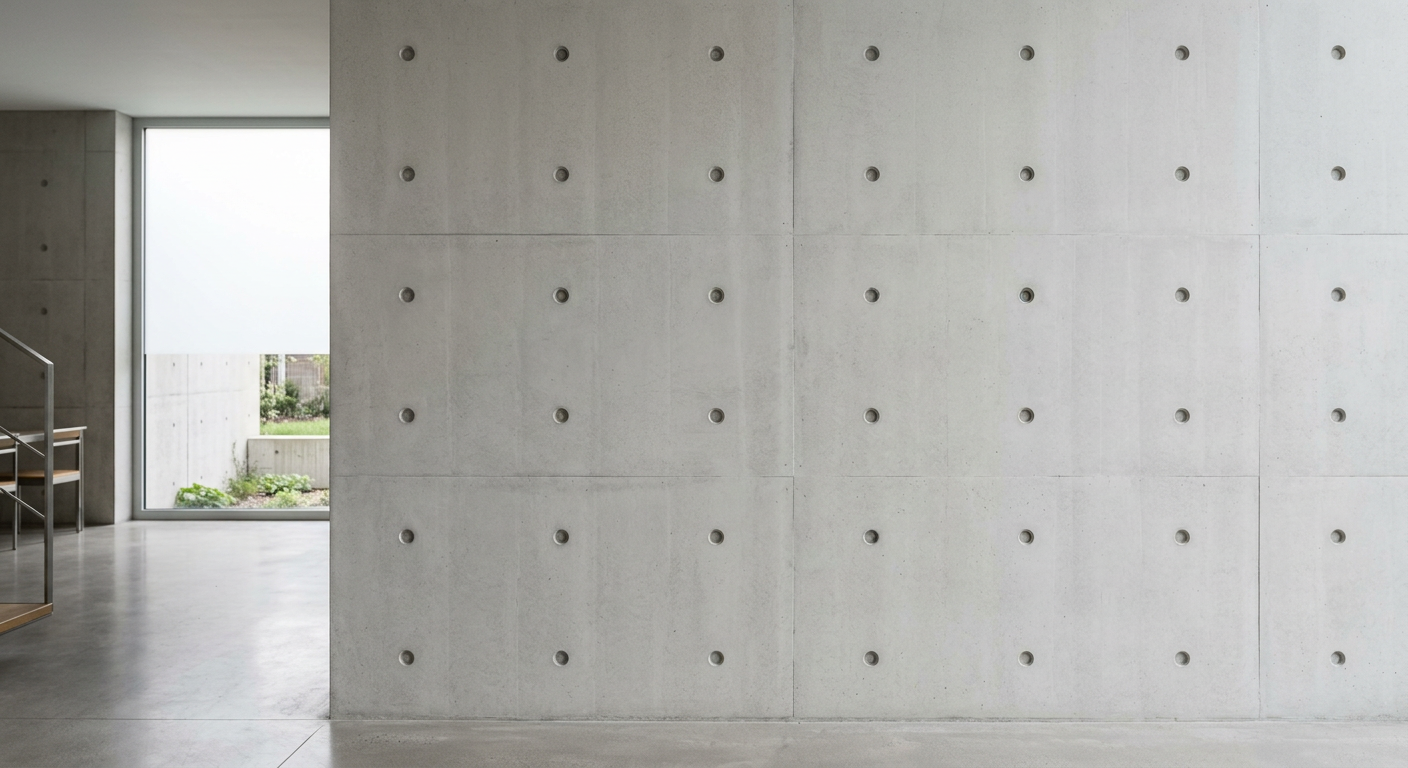
Film-faced plywood produces what the industry calls “fair-faced” or “architectural” concrete — smooth, uniform, minimal bug holes. Regular plywood leaves wood-grain imprints, raised fibres, and surface voids that need grinding, patching, or skim-coating. On exposed concrete facades (think modern commercial lobbies or parking structures), that remediation work can cost $15–$30 per square metre — sometimes more than the formwork panel itself.
For instance, a European distributor we supply ships our 18 mm birch-core film-faced panels specifically for architectural concrete projects in Scandinavia, where exposed concrete walls are a design feature. Switching from regular plywood to film-faced panels eliminated their clients’ post-pour patching step entirely, cutting finishing labour by an estimated 30%.
Concrete formwork lives outdoors. Rain, morning dew, and the water in fresh concrete itself assault every panel on every pour. This is where the phenolic film earns its keep.
Regular plywood absorbs moisture through its face veneers and — critically — through exposed edges. Swelling follows. Then delamination. After a few wet cycles, the surface starts to flake and the panel warps. You can slow this with edge sealant and diligent oiling, but you cannot stop it. Understanding why plywood water resistance fails in real-world use helps explain why unprotected panels deteriorate so quickly on formwork duty.
Film-faced plywood resists moisture on its faces almost completely. The weak point is still the edges — which is why sealing cut edges with paraffin wax or acrylic sealant is non-negotiable if you want to hit those 50+ reuse numbers. Skip that step and you might only get 20–25 pours, which still beats regular plywood but leaves money on the table.
A common sourcing mistake: treating all film-faced plywood as identical. The film weight alone creates significant performance differences.
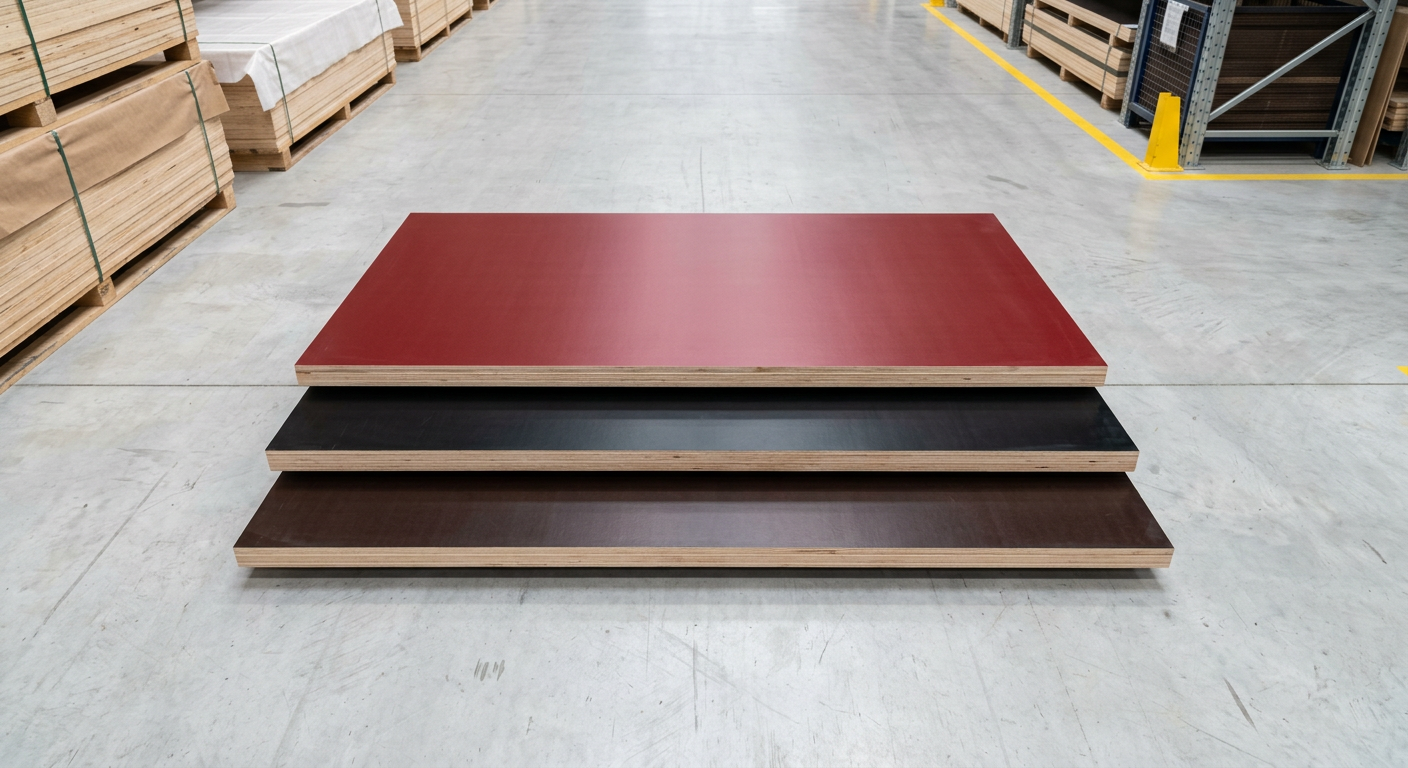
Brown film is standard. Black film typically uses a slightly different resin formulation and is popular in Middle Eastern and Southeast Asian markets. Some suppliers offer anti-slip mesh overlays for platforms and walkways — a different product category from formwork panels, though the base construction is similar. You can explore our full product range to see the overlay options we manufacture.
Buying film-faced plywood is only half the equation. How you handle it on site determines whether you get 25 pours or 60. Here are the practices that separate efficient crews from wasteful ones:
The moment you cut a panel, moisture has a highway into the core. Apply paraffin wax, waterproof paint, or acrylic edge sealant before the panel touches concrete. This single habit can add 10–15 reuse cycles.
Water-based release agents are gentler on the film than diesel or waste oil (which some crews still use, despite it degrading phenolic resin). A thin, even coat is better than a heavy one — excess oil traps air bubbles against the concrete.
Prying panels off with a crowbar damages edges and corners — the most vulnerable areas. Use flat stripping bars and start from the designed release points. Rushed stripping is the number-one cause of premature panel failure.
Scrape off concrete residue while it is still fresh (within hours, not days). Stack panels flat on level bearers, face-to-face, and cover them if they will sit idle for more than a week. Panels left leaning against walls warp permanently.
Use a first-in-first-out system so no panel set sits idle while another set gets overworked. Even wear across your inventory extends the useful life of the entire batch.
Not every film-faced panel on the market delivers what it promises. Here are the questions that separate informed buyers from those who get burned:
At plysupplier, we manufacture film-faced formwork panels with documented film weights, WBP phenolic glue, and CE/FSC/CARB certifications — because serious formwork buyers need data, not sales pitches. Reach out to our team if you want specification sheets or samples before committing to a bulk order.
A general contractor in the UAE was using locally sourced regular plywood for residential tower formwork. They were replacing panels every 6–8 pours and spending heavily on release agents and concrete surface remediation. Their formwork line item was consistently 18% over budget.
After switching to 18 mm poplar-core film-faced plywood (180 g/m² brown film) sourced from our Xuzhou facility, they tracked panel performance across 14 months. Results:
The initial purchase order was 30% more expensive than their previous supply. But by the third month, the cumulative savings had already offset the premium — and kept compounding for the remaining 11 months of the project.
This decision is not really about which panel is “better” — it is about which panel fits your project economics. Here is the simplest decision framework:
For most professional construction companies pouring concrete repeatedly, film-faced plywood is not an upgrade — it is the baseline. The math is clear, the surface quality is superior, and the total project cost is lower. If you are sourcing formwork panels for an upcoming project, our team can help you match the right film weight, core species, and panel dimensions to your specific requirements. Browse our full plywood product range or get in touch for a custom quote.

How to Inspect Plywood Core Voids and Delamination Before Accepting a Bulk Order

Plywood Container Loading Guide: Moisture Protection, Palletizing, and Sheet Damage Prevention

Film-Faced vs. Antislip Plywood for Concrete Formwork: Which One Actually Lasts Longer?

Understanding Bond Line Strength: The Adhesive Science Behind Durable Plywood

Acoustic Wall Panels in Modern Office Fit-Outs: Design Choices That Pay Off

Anti-Slip Plywood for Campervan Flooring: Why Vehicle Builders Are Switching in 2026
Loading languages…