Language
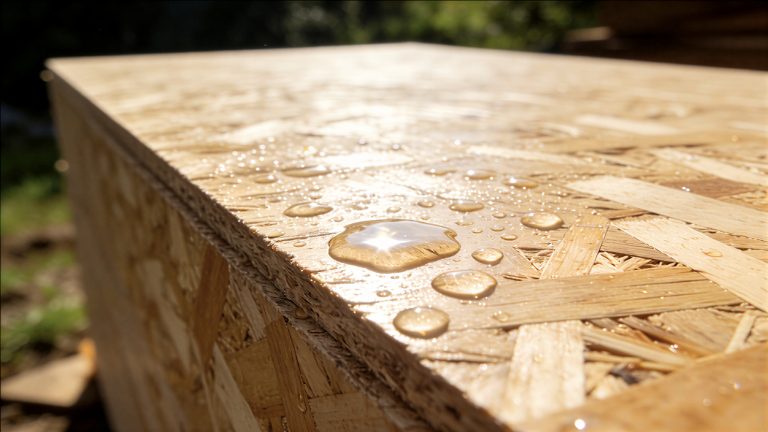
Outdoor plywood fails for one simple reason: moisture enters the panel faster than it can escape. Many people blame the grade stamp, but long-term durability outside depends on three things that rarely get explained clearly: the glue system, the core construction, and how you protect edges and surfaces.
This guide focuses on what actually determines outdoor performance, so you can pick panels that resist delamination, warping, and early decay in real conditions.
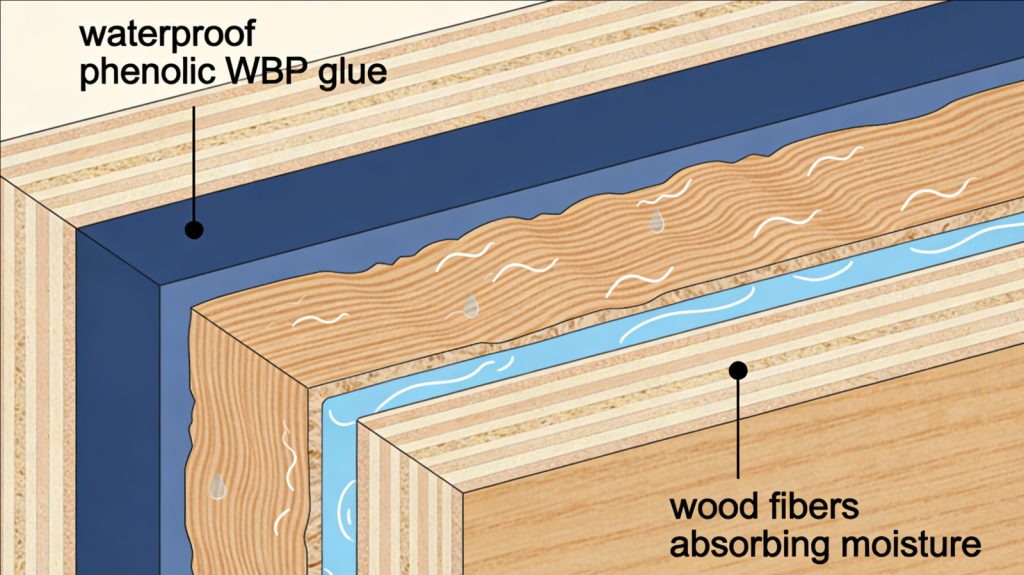
Exterior plywood uses waterproof bonding systems to hold veneers together under wet conditions. Phenolic WBP, PF-based WBP, and similar exterior-rated adhesives help keep plies from separating as the panel cycles through wet and dry exposure.
That said, waterproof glue does not make the wood waterproof. Wood fibers still absorb moisture through faces, fastener holes, and especially through cut edges. That is why finishing and edge sealing matter as much as the adhesive.
Two panels can share the same face grade and still perform very differently outdoors. The difference usually comes from the core build.
Outdoor durability improves when the panel has:
If your project will see long exposure or visible surfaces, core construction belongs near the top of your checklist.
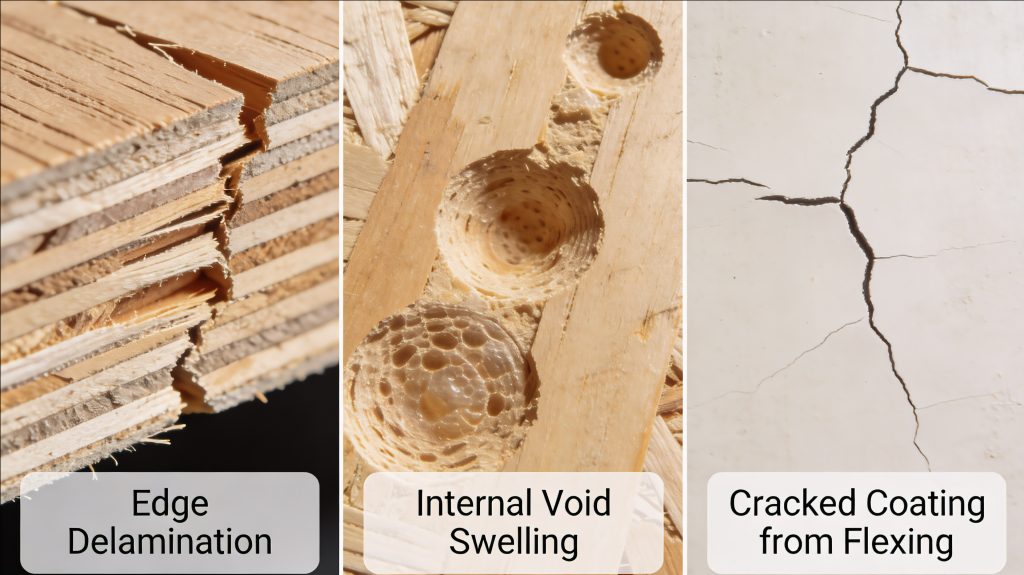
Most premature failures start at exposed end grain. Once water enters through a raw cut, swelling and cycling accelerate. Seal cut edges immediately after trimming or drilling, and touch up edge protection over time. Treat edge sealing as a standard step, not a finishing detail.
Use this decision path to select the right panel without guessing.
For outdoor use, prioritize exterior-rated bonding such as phenolic WBP or equivalent waterproof systems. MR glue can fit protected uses where direct wetting is limited, but it is not the same as WBP for demanding exposure.
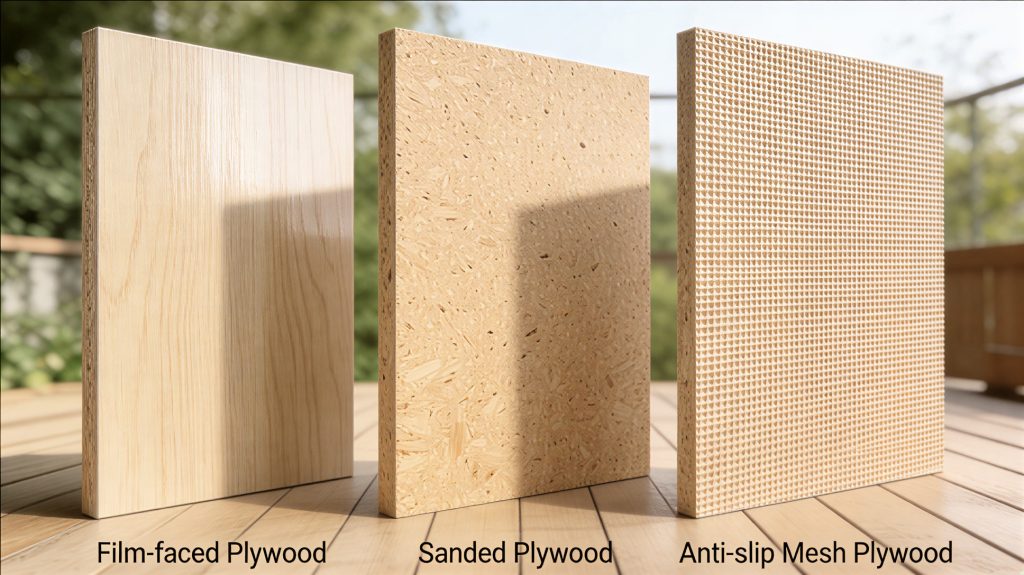
Many outdoor issues that look like “material failure” are actually deflection problems. If a panel bends too much, coatings crack and joints open, letting water in.
As a practical baseline:
If you know your support spacing and expected load, you can choose thickness more confidently.
Do not treat finishing as a last step. Seal faces and edges before final assembly when possible, then touch up fastener areas and cut edges during installation.
Grade stamps tell you a lot about face quality and intended use. For long-term outdoor exposure, factors like core structure and moisture management often become just as important.
CDX typically indicates a construction-oriented panel with an exterior-rated bond, commonly used where appearance is not the priority and the panel will be covered.
Best fits:
What to watch:
ACX is commonly chosen when one face will be visible and a smoother finish matters.
Best fits:
What actually matters outdoors:
True marine-grade plywood follows stricter controls on core quality and layup. Standards such as BS 1088 emphasize consistent veneers and tighter limits on internal defects compared with general exterior plywood.
Best fits:
If your project is not continuously wet or you are not building curved or premium assemblies, exterior WBP plywood paired with disciplined edge sealing and finishing often delivers stronger value.
The fastest path for moisture is raw end grain and drilled holes. Sealing edges and treating fastener penetrations as moisture paths is the simplest way to extend service life.
Voids create pockets where water lingers. In freeze-thaw or high-humidity cycling, trapped moisture increases swelling stress and drives early checking, warp, and bond stress.
When a panel deflects, coatings crack at joints and fasteners. Cracks invite water. A stiffer panel and better support spacing protect the finish system.
Outdoor assemblies need drainage paths and ventilation gaps. Trapped moisture behind impermeable layers can still cause issues if the design holds water against the panel.
Pressure-treated plywood is a separate category that uses chemical preservatives for ground-contact or extremely high-moisture environments. It follows different performance logic than WBP exterior plywood.
If your design includes soil contact, standing water, or constant saturation risk, treated products are typically the correct direction. For non-ground-contact outdoor work, exterior plywood combined with proper edge sealing, finishing, and drainage design is the more appropriate system.
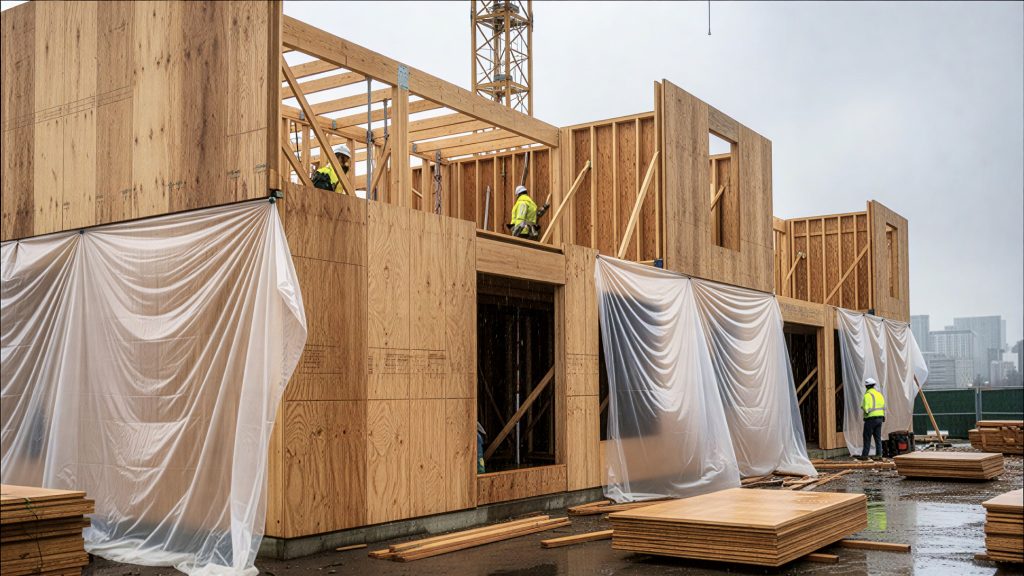
Use exterior-bonded plywood and keep it protected by roofing, underlayment, and correct detailing. Focus on edge protection at transitions and penetrations.
Choose a smoother face suitable for coating, then commit to sealing all faces and edges with an exterior-grade finish system. Touch up cut edges immediately.
Film-faced plywood with waterproof bonding and sealed edges supports cleaner stripping and more consistent reuse. Reseal cut edges to prevent water entry.
Prioritize exterior bonding, stable core construction, and strict edge sealing. In these conditions, finishing discipline matters more than upgrading the stamp on the panel.
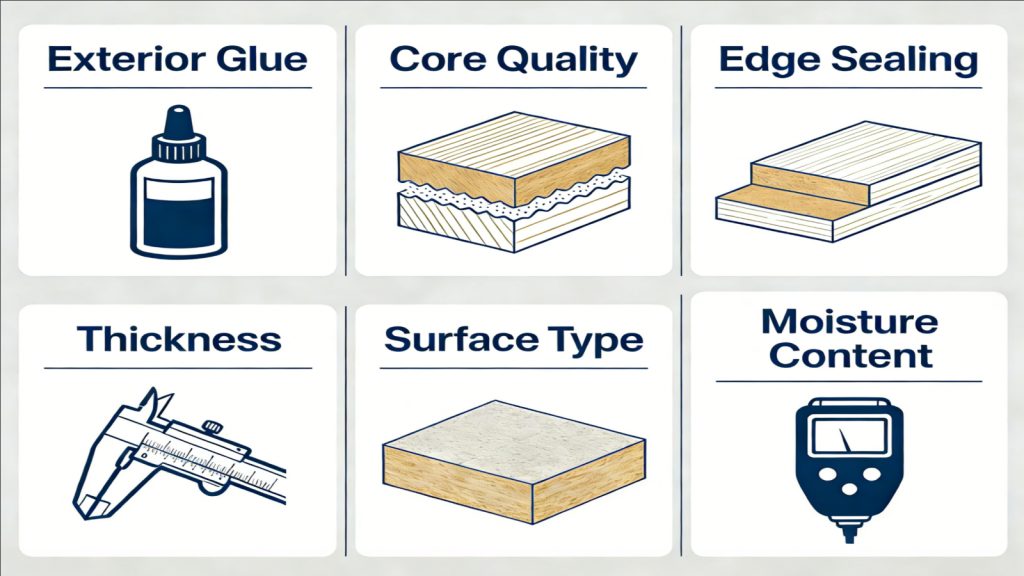
Use this checklist to compare panels on the factors that actually control outdoor performance:
Many outdoor plywood problems are blamed on “bad material,” but most failures come from avoidable decisions during selection or installation.
Fresh cuts expose end grain, which absorbs moisture far faster than face veneers. Even high-quality exterior plywood can swell and deteriorate quickly if cut edges are left raw. Seal every cut edge immediately after trimming.
Panels that are too thin flex under load. That movement cracks coatings and opens joints, allowing water to enter. Matching thickness to support spacing is just as important as choosing an exterior-rated panel.
A smooth face improves appearance, but it does not guarantee outdoor durability. Panels with inconsistent cores or internal voids fail faster outside, even when the visible surface looks perfect.
Coating only the exposed face leaves the back and edges vulnerable. Moisture enters unevenly, increasing warp and stress. Seal faces and edges before assembly whenever possible, then touch up during installation.
Outdoor assemblies must shed water and allow drying. Tight joints, flat horizontal surfaces, and sealed cavities without drainage keep moisture locked against the panel and accelerate breakdown.
Avoiding these mistakes often extends service life more than upgrading to a higher grade.
Outdoor durability comes from moisture control, not labels alone. Grade stamps help with face quality and intended use, but long exposure makes core consistency, edge sealing, stiffness, and a finish system that stays intact just as important. For most outdoor projects that are not in constant water, exterior plywood with waterproof bonding performs well when you seal cut edges, coat all faces, and build for drainage and drying.
Choose based on how wet the panel will get, how quickly it can dry, and how reliably you can protect its edges. Marine-grade panels make the most sense for continuous exposure or premium builds where tighter core control and long-term stability matter.