Language
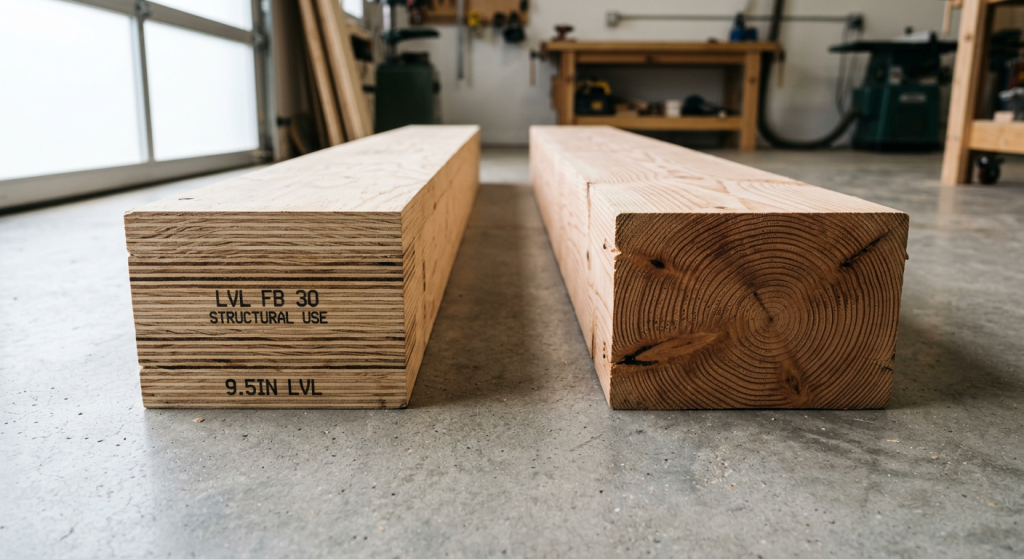
LVL beats solid lumber in almost every structural metric that matters — higher bending strength, longer achievable spans, and near-zero variability between pieces. But solid lumber remains the smarter pick for standard framing tasks where spans are short and budgets are tight. The real question isn’t which material is “better” — it’s which one matches your specific load, span, and budget requirements. This guide gives you the hard numbers and practical decision framework to choose correctly every time.
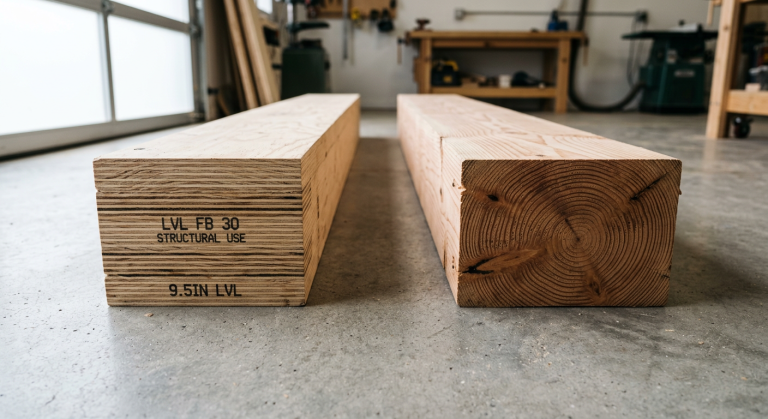
Laminated Veneer Lumber is an engineered wood product built by bonding multiple thin wood veneers — typically 2.5 to 4.0 mm thick — together under heat and pressure with structural adhesives. The veneers are oriented with their grain running primarily in the same direction (the long axis), which is what gives LVL its remarkable longitudinal strength. Think of it as plywood’s muscular cousin, purpose-built for carrying heavy loads over long distances.
Because LVL is assembled veneer by veneer, natural defects like knots, checks, and grain deviation get distributed and diluted across the cross-section. A single large knot that would create a critical weak point in a solid timber beam becomes statistically insignificant when spread across 30+ veneer layers. This is why LVL achieves design strengths that solid lumber simply cannot guarantee. At plysupplier, our LVL and LVB product lines are manufactured with this same multi-layer bonding process, using rotary-peeled veneers from sustainably sourced timber.
Softwood species like radiata pine, Douglas fir, and poplar dominate LVL production. Hardwood veneers (eucalyptus, birch) are sometimes used for specialty applications requiring extra density. The species choice affects the final MOE (Modulus of Elasticity) and MOR (Modulus of Rupture), so always check the grade stamp — not just the label.
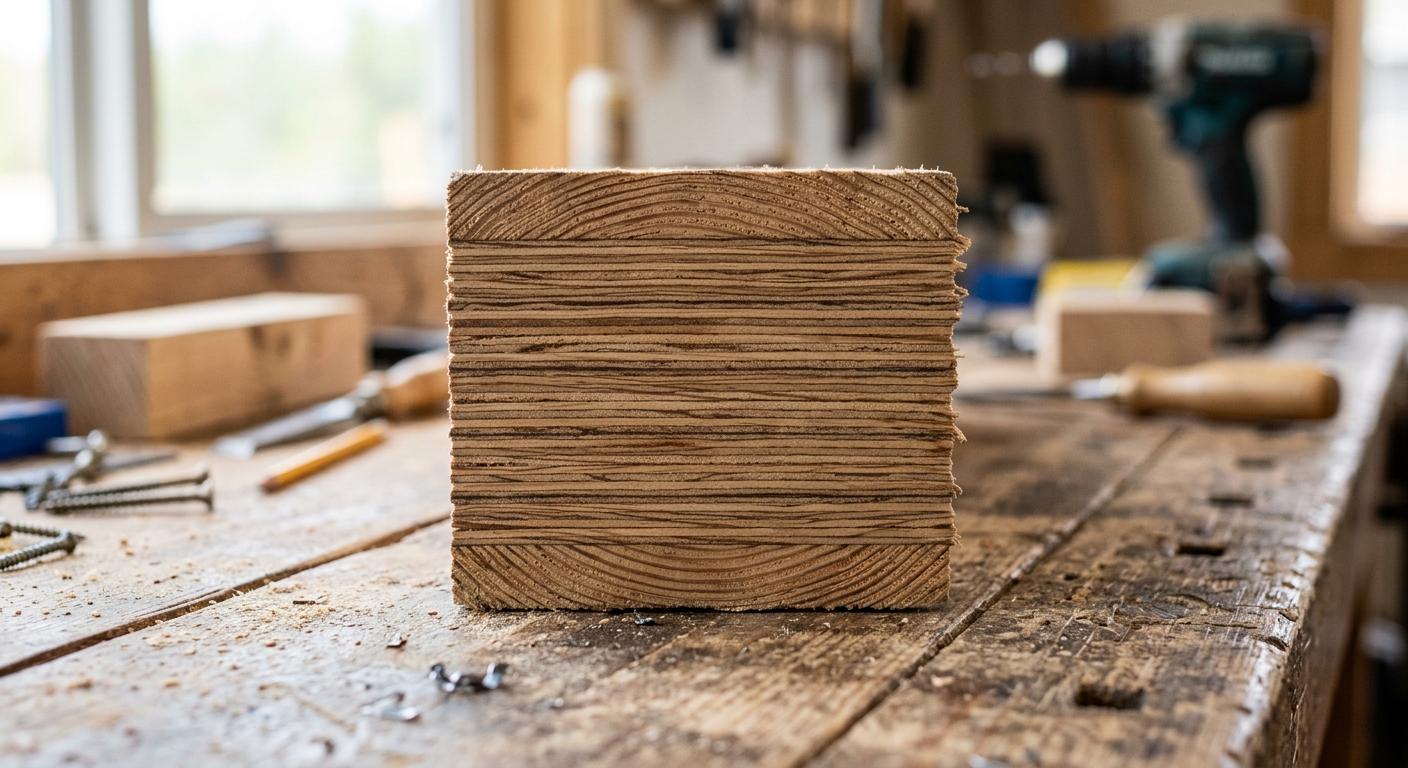
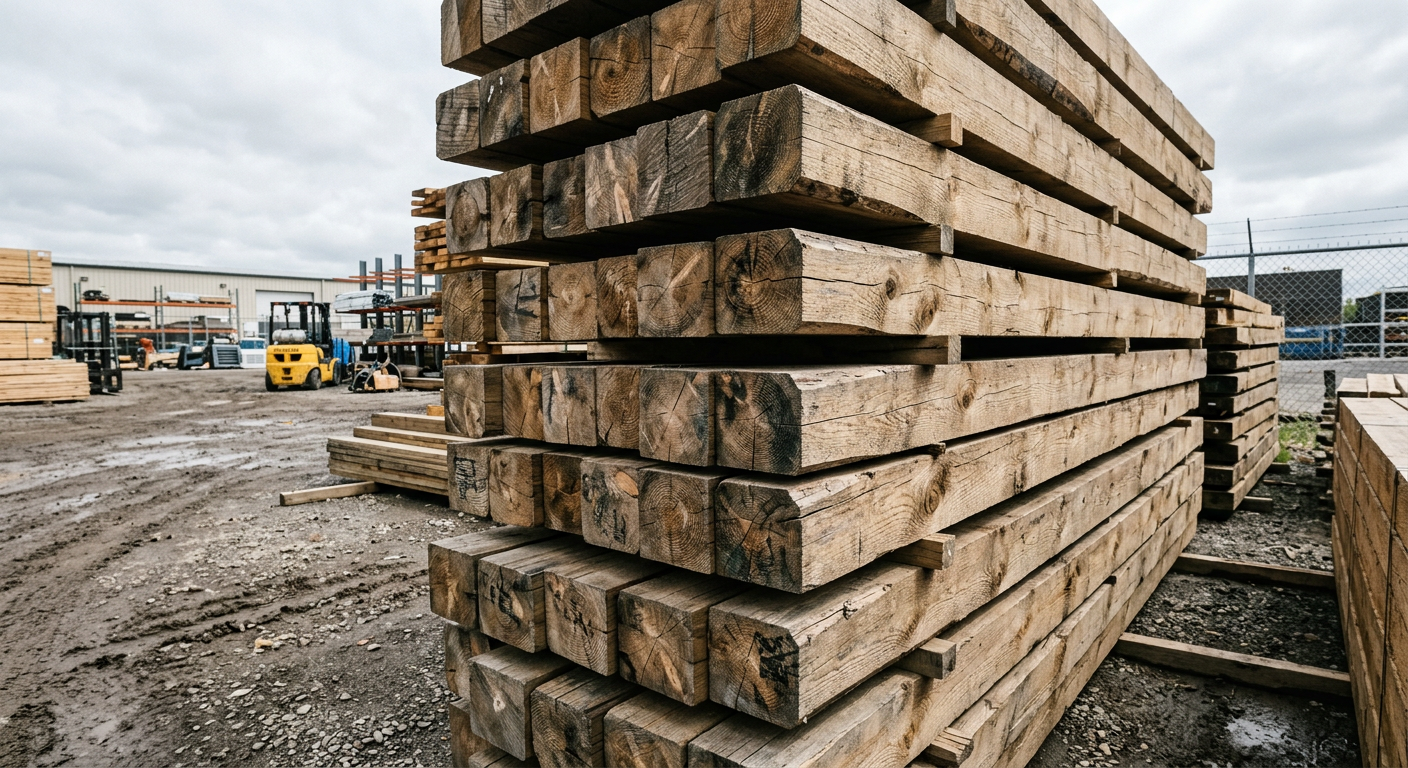
Solid lumber — sawn directly from logs and dried — has been the backbone of construction for millennia. And for good reason: it’s affordable, universally available, easy to work with hand and power tools, and perfectly adequate for the vast majority of residential framing tasks. A standard 2×10 Douglas fir joist spanning 4 meters? Solid lumber handles that without breaking a sweat.
The problem starts when you push beyond ordinary spans and loads. Solid lumber is limited by the diameter of the tree it came from. Need a 600 mm deep beam? You’re looking at old-growth timber that’s increasingly scarce and expensive. Need consistent mechanical properties across 200 pieces? Good luck — natural variability means your No. 2 grade lumber can vary in actual bending strength by 30% or more between individual pieces. Knots, slope of grain, juvenile wood, and moisture content all conspire against predictability.
Visual grading (the most common method) assigns a grade based on the worst visible defect. Machine stress-rated (MSR) lumber is better, but still shows more piece-to-piece variation than LVL. This variability is why structural engineers apply larger safety factors to solid lumber designs — which often means specifying bigger members, partially eroding the cost advantage.
Let’s stop speaking in generalities and look at actual numbers. Here’s a direct comparison across the criteria that drive real building decisions:
| Criteria | LVL (Laminated Veneer Lumber) | Solid Lumber |
|---|---|---|
| Bending Strength (MOE) | Up to 19,000 MPa | 9,000–12,500 MPa typical |
| Consistency | Uniform — minimal defects | Variable — knots, grain deviation |
| Maximum Span (beam) | Up to 18 m+ | Typically limited to 6 m |
| Dimensional Stability | Excellent — low shrinkage | Moderate — prone to warp/twist |
| Cost per Linear Meter | Higher upfront | Lower upfront |
| Availability of Large Sections | Readily manufactured to spec | Limited by tree diameter |
| Fire Resistance (untreated) | Comparable to solid wood | Comparable to LVL |
| Best Use Case | Long-span beams, headers, heavy loads | Studs, joists, light framing |
A 90×360 mm LVL beam can comfortably span 7–8 meters under typical residential floor loads. To achieve the same span with solid timber, you’d need a significantly deeper section — often 90×450 mm or larger in a high-grade species — and even then, deflection (bounciness) may be an issue. For commercial projects with 10–15 meter clear spans, LVL is often the only timber option on the table.
There are scenarios where specifying solid lumber over LVL would be borderline negligent. Here are the big ones:
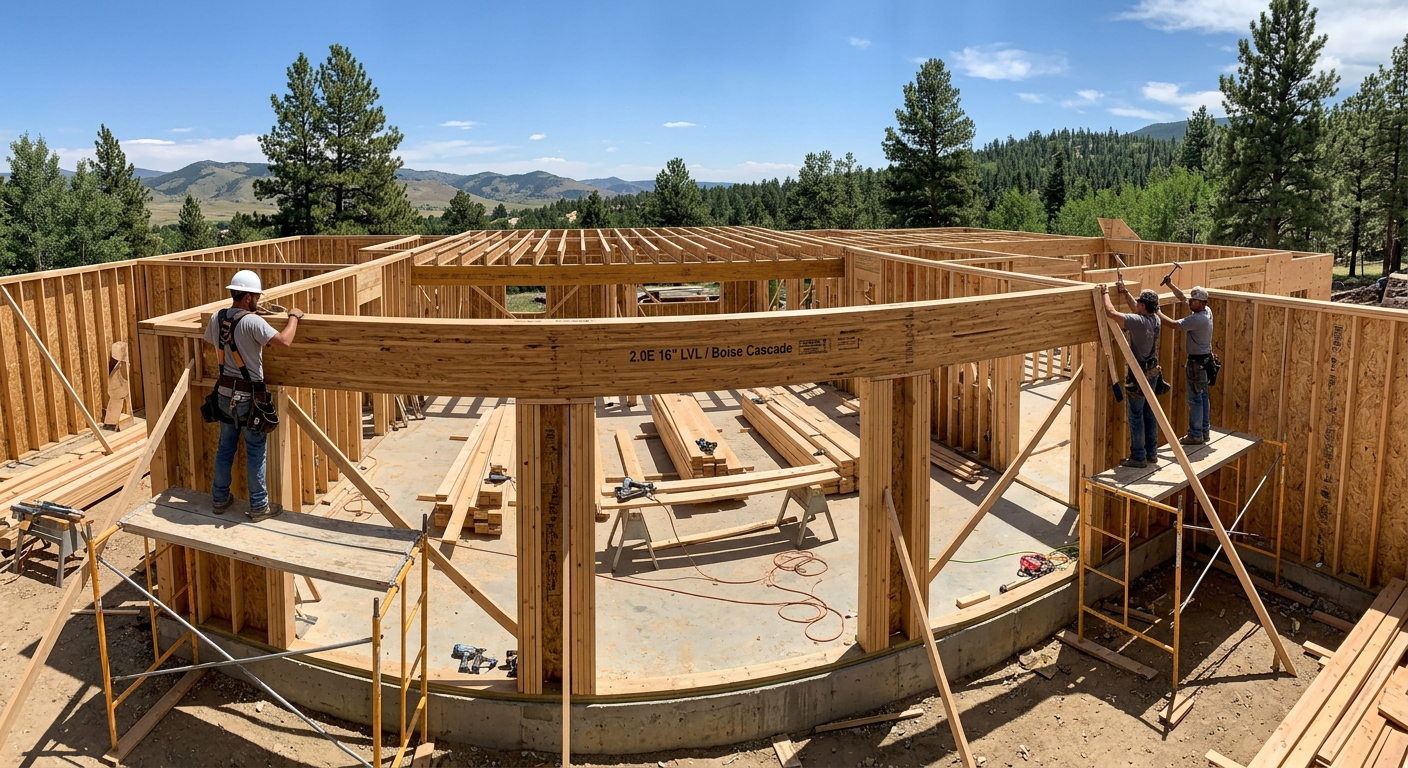
Any beam spanning more than 5–6 meters in a floor or roof system is LVL territory. The higher MOE means less deflection, and the consistent strength means the engineer can use tighter safety factors — resulting in smaller, lighter members that are easier to handle on site.
Wide openings in load-bearing walls create concentrated loads. A 3.6 m garage door header in LVL might be a 2-ply 45×240 mm assembly, while the equivalent solid lumber header could require a 3-ply 45×290 mm stack. Less material, less weight, less labor.
For walls exceeding standard 2.4 m height — think commercial lobbies or double-height residential spaces — LVL studs resist buckling far more reliably than solid lumber, where a single edge knot can halve the column capacity.
A mid-size construction firm in Southeast Asia recently switched from importing large-section hardwood beams to using LVL for their multi-story timber frame projects. The result: 22% reduction in structural timber volume (because the engineer could specify smaller sections), faster installation (lighter members), and zero rejected pieces due to defects. Their total material cost went up about 10%, but labor savings and waste reduction made the project cheaper overall.
Don’t let the LVL hype fool you into over-engineering. Solid lumber remains the right call for a huge portion of building work.
2×4 and 2×6 studs at 400 or 600 mm centers for standard-height walls? Solid lumber is cheaper, universally stocked, and structurally more than adequate. Using LVL here would be like hiring a crane to move a wheelbarrow.
For spans under 4 meters with typical residential loads, No. 2 grade solid lumber joists work perfectly. The cost difference can be 40–60% less than LVL, and the structural performance is not meaningfully different at these short spans.
Blocking, bracing, cripple studs, temporary shoring — these applications don’t justify the premium of engineered lumber. Solid lumber is the practical, economical choice.
When the timber will be visible — think exposed ceiling beams, timber-frame accents, or rustic interior finishes — solid lumber’s natural grain character is often preferred over LVL’s laminated appearance. For decorative panels and wall treatments, you might also explore different types of ply board that offer both structural integrity and visual appeal.
Here’s a point that trips up a lot of builders: LVL is not inherently more water-resistant than solid lumber. In fact, untreated LVL can be more vulnerable to moisture because the adhesive bond lines can wick water into the core via capillary action, causing delamination over time.
For any application with direct weather exposure or sustained high humidity — deck beams, retaining wall posts, foundation-adjacent members — you need either preservative-treated material or a species with natural durability (like certain hardwoods). This applies equally to LVL and solid lumber. If you’re evaluating panels for outdoor or moisture-prone environments, our guide on the best plywood for outdoor use covers the key selection criteria, many of which apply to LVL as well.
LVL manufactured with phenol-formaldehyde (PF) adhesives offers significantly better moisture resistance than LVL made with melamine-urea-formaldehyde (MUF). Always verify the adhesive class — especially for enclosed but unheated spaces like garages, porches, or agricultural buildings where condensation is common. For projects where water resistance failures are a concern, understanding adhesive types is non-negotiable.
The sticker price comparison between LVL and solid lumber is misleading if you stop at the per-meter material cost. You need to think in terms of installed system cost.
LVL typically costs 1.5× to 2.5× more per cubic meter than equivalent-grade solid lumber. For a standard 90×240 mm beam, expect to pay roughly 30–80% more for LVL depending on your market and supplier.
For beams and headers over 4 m span, the installed cost of LVL is often equal to or less than solid lumber once you factor in the smaller section size and reduced waste. Below 4 m, solid lumber almost always wins on total cost.
Whether you choose LVL or solid lumber, the paperwork matters — especially for export projects and international building codes.
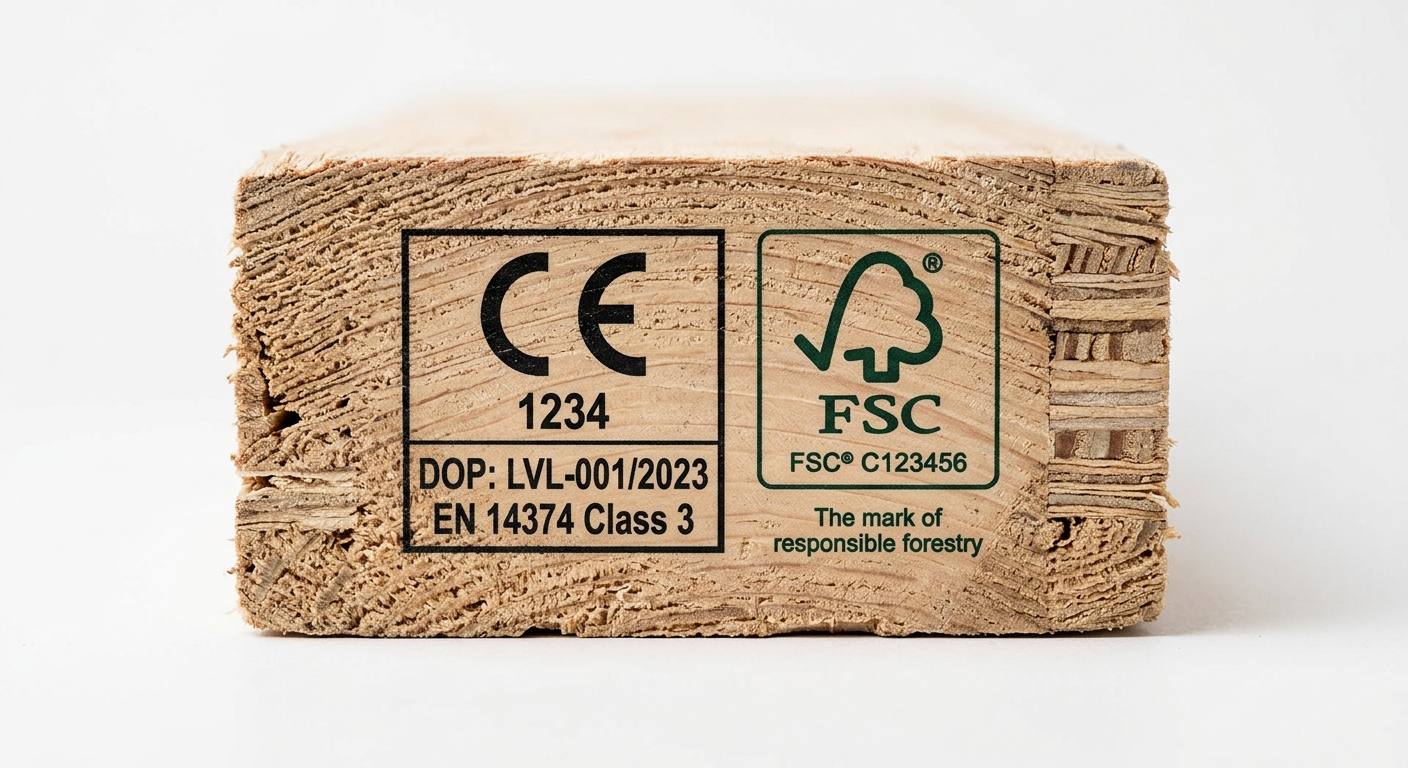
Look for CE marking (EN 14374 in Europe), product evaluation reports for your target market (e.g., ICC-ES in North America), and CARB Phase 2 compliance if formaldehyde emissions are regulated. FSC or PEFC chain-of-custody certification is increasingly required by government and institutional clients.
Grading stamps (visual or MSR) from an accredited agency are essential. Species identification, moisture content at time of dressing, and the grading standard (e.g., AS/NZS 1748, NLGA) should all be clearly marked.
If you’re sourcing LVL from overseas — particularly from China, the world’s largest LVL exporter — verify that the manufacturer holds current certifications for your destination market. At plysupplier, our LVL products carry CE, CARB, and FSC certifications, and we provide full documentation packages for customs clearance. You can review our company credentials and factory capabilities for more detail.
Still not sure which to specify? Run through these three questions:
If yes, LVL is almost certainly the right choice. The deflection performance alone justifies it, and you’ll likely end up with a smaller, lighter member.
For applications where post-construction movement causes problems — supporting tile floors, aligning precision cabinetry, or forming part of an airtight envelope — LVL’s stability is worth the premium.
If you’re framing walls, installing short-span joists, or doing any work where hundreds of identical pieces are needed at standard dimensions, solid lumber is faster to source, cheaper to buy, and perfectly adequate structurally.
Most real-world projects use both materials. The smartest builders use LVL where it delivers measurable structural or performance advantages, and solid lumber everywhere else. That hybrid approach minimizes cost while maximizing performance.
LVL and solid lumber aren’t competitors — they’re teammates. LVL dominates where strength-to-weight ratio, long spans, and dimensional predictability matter most. Solid lumber holds its ground in cost-sensitive, short-span, and aesthetically driven applications. The builder who understands both materials — and deploys each where it excels — builds better structures at lower total cost.
If you’re sourcing LVL beams, LVB scaffold boards, or any engineered wood products for structural or industrial applications, plysupplier manufactures and exports certified LVL in custom dimensions from our 50,000 m² facility in Xuzhou. We handle everything from small trial orders to full container loads with documentation for your market. Reach out to our team with your specifications and we’ll provide a detailed quote within 24 hours.

Film-Faced vs. Antislip Plywood for Concrete Formwork: Which One Actually Lasts Longer?

Understanding Bond Line Strength: The Adhesive Science Behind Durable Plywood

Acoustic Wall Panels in Modern Office Fit-Outs: Design Choices That Pay Off
Anti-Slip Plywood for Campervan Flooring: Why Vehicle Builders Are Switching in 2026
LVL vs. Solid Lumber: A Structural Comparison Every Builder Should Understand
Film-Faced Plywood vs. Regular Plywood for Concrete Formwork: Which One Saves You Money?
Loading languages…