Language

A properly loaded plywood container comes down to three things: a sealed moisture barrier lining the container walls and floor, sheets banded onto pallets or bundles rather than floor-stacked loose, and enough dunnage and bracing to stop movement during transit. Skip any one of these and you’re gambling with condensation damage, edge chipping, or a shifted load that arrives crushed against the container doors. Get all three right, and plywood can cross oceans in a 40-foot high-cube for six weeks and come out looking like it just left the press line.
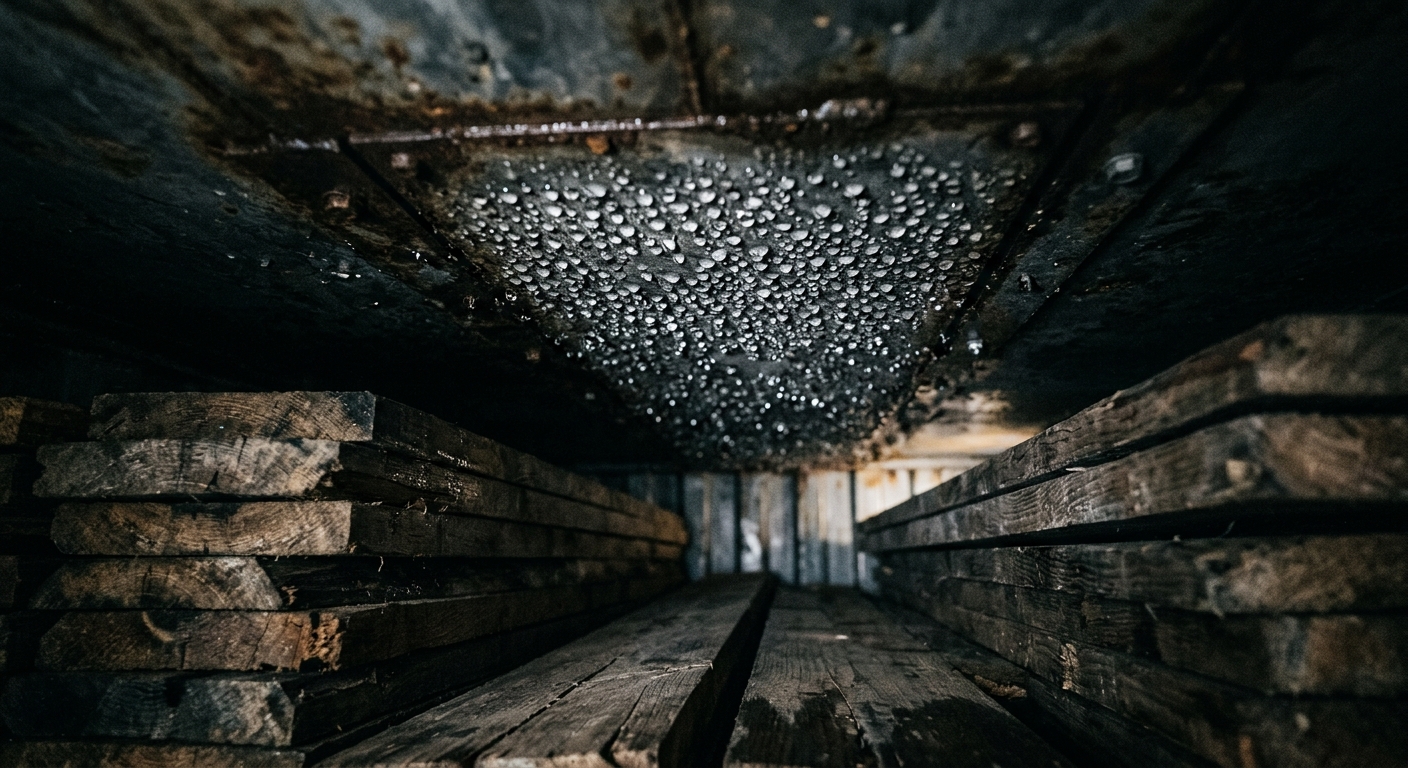
Here’s the thing nobody tells first-time importers: the biggest threat to your plywood isn’t rain at the port. It’s the container itself sweating from the inside out. As a sea container travels through temperature swings — cold nights, hot afternoons, cold nights again — moisture trapped inside condenses on the steel roof and walls. That water drips straight onto your top sheets. Shippers call it “container rain,” and it’s caused more delamination claims than actual weather ever has.
Plywood itself carries residual moisture from manufacturing, typically 8-12% depending on core type. Combined with humid air sealed inside a steel box for 30-45 days on a long-haul route, you get a microclimate perfect for mold bloom and veneer lifting. This is exactly the failure mode discussed in Plywood Water Resistance and Why It Fails in Real-World Use — except here the damage happens before the panel ever reaches a jobsite.
Desiccant bags (calcium chloride, not silica gel for large volumes) rated for container use should be hung at multiple points, not just tossed on the floor. Budget roughly 1 unit of desiccant per 2-3 cubic meters of enclosed space for a standard 40ft container on a 30+ day route.
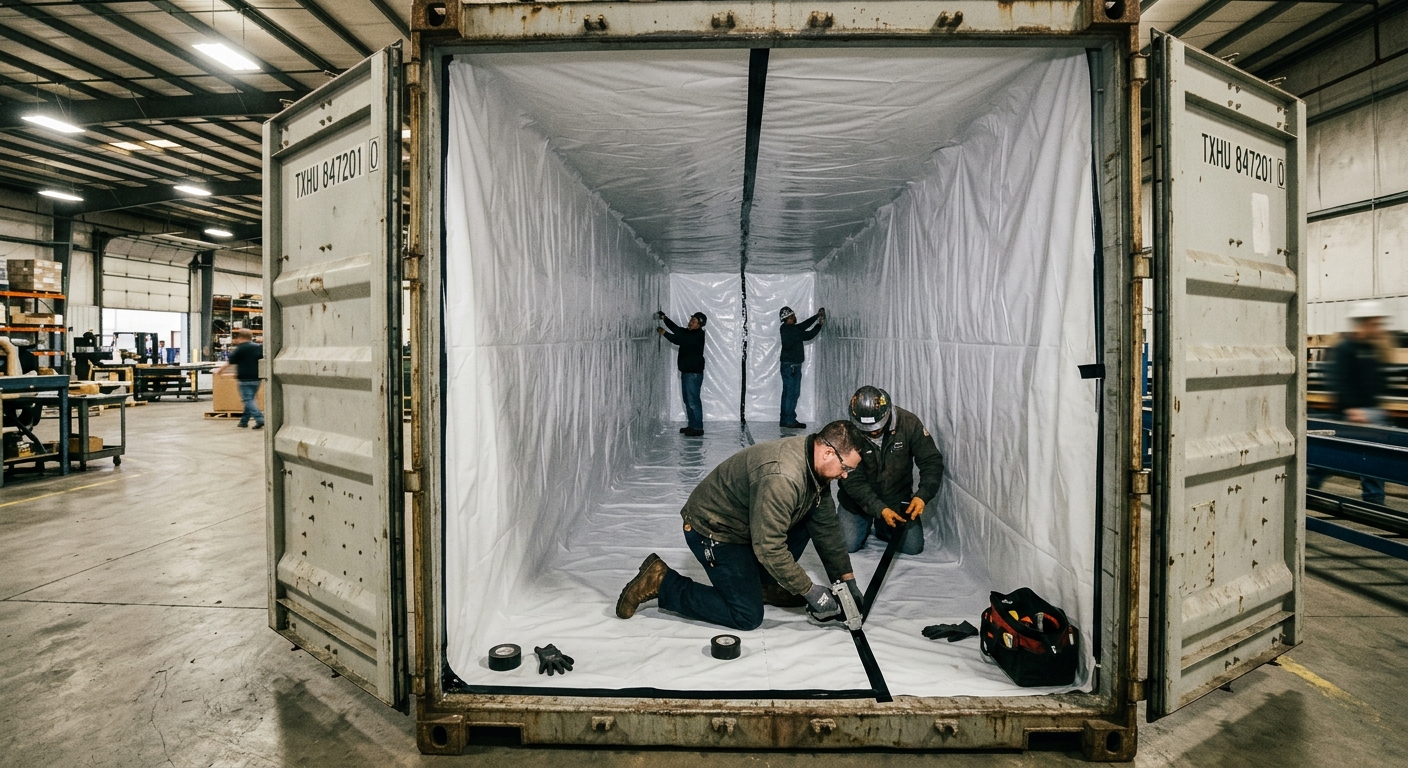
A container liner isn’t optional for plywood on any route longer than two weeks — full stop. The standard setup uses a heavy-gauge polyethylene liner (minimum 200 micron) that covers the floor and wraps up the walls, essentially creating a sealed pouch around the entire cargo before doors close.
For high-value orders — birch plywood or film-faced sheets headed to markets with strict receiving inspections — some exporters add VCI (vapor corrosion inhibitor) paper between sheet stacks. It’s overkill for standard structural panels but worth the small cost for premium finishes.
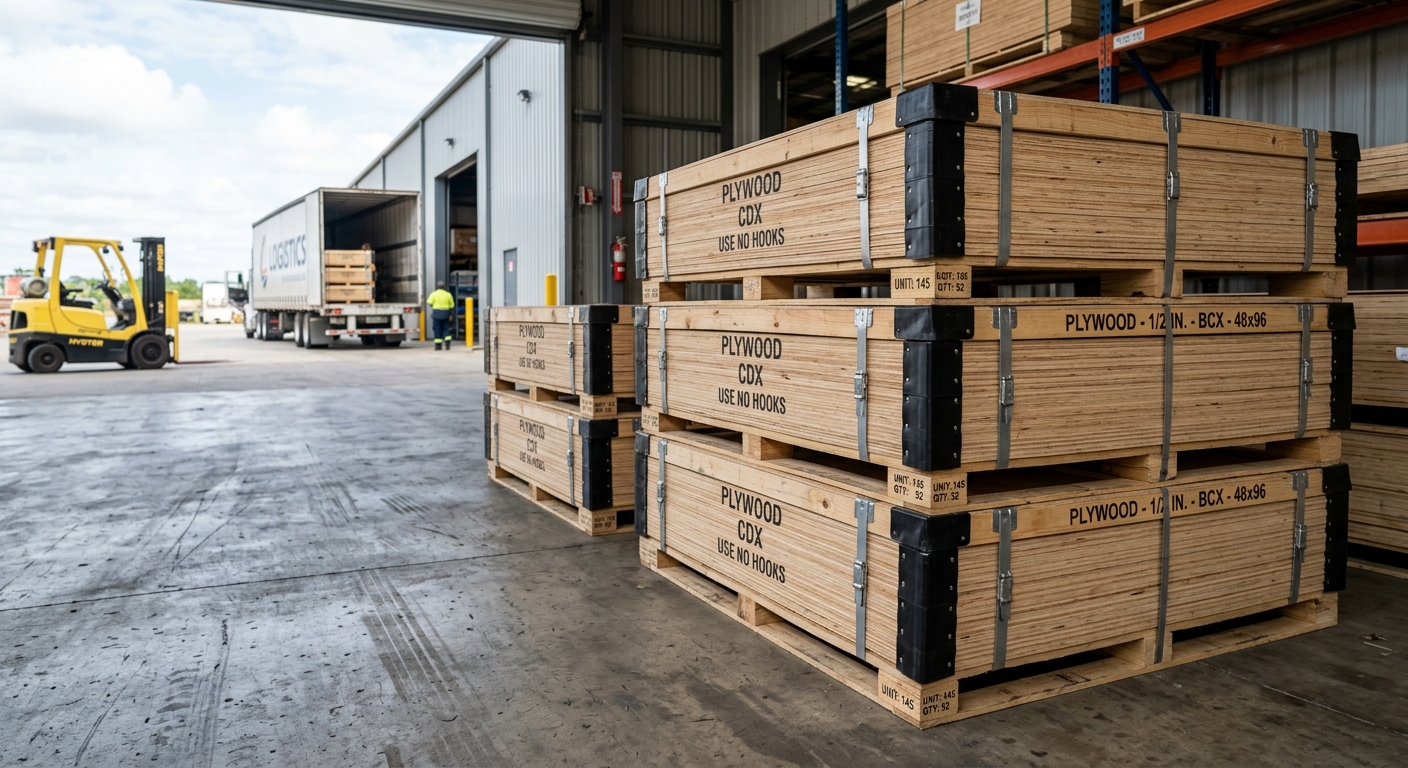
Floor-loading loose sheets to squeeze in extra volume is the single most common mistake we see from cost-cutting exporters — and it’s almost always a false economy. Loose sheets shift during transit, chafe against each other, and take the brunt of every hard brake or wave swell. Palletized loads distribute weight evenly and keep sheets locked in position for the entire voyage.
Most plywood pallets run 1.22m x 2.44m footprint (matching standard 4×8 sheet size) with stacks capped around 1.0-1.2m height for stability. Corner protectors — L-shaped cardboard or plastic angles — go on every pallet edge before strapping, preventing the metal banding from crushing edge veneers.
For example, a furniture manufacturer importing birch plywood recently switched from floor-loaded to fully palletized shipments and cut their damage-related rejection rate from around 6% to under 1% per container — the strapping and corner protection alone paid for themselves within two shipments.
If you’re sourcing custom sizes, ask your supplier how they handle oversized panels — check our products range for options built with export palletizing in mind from the start.
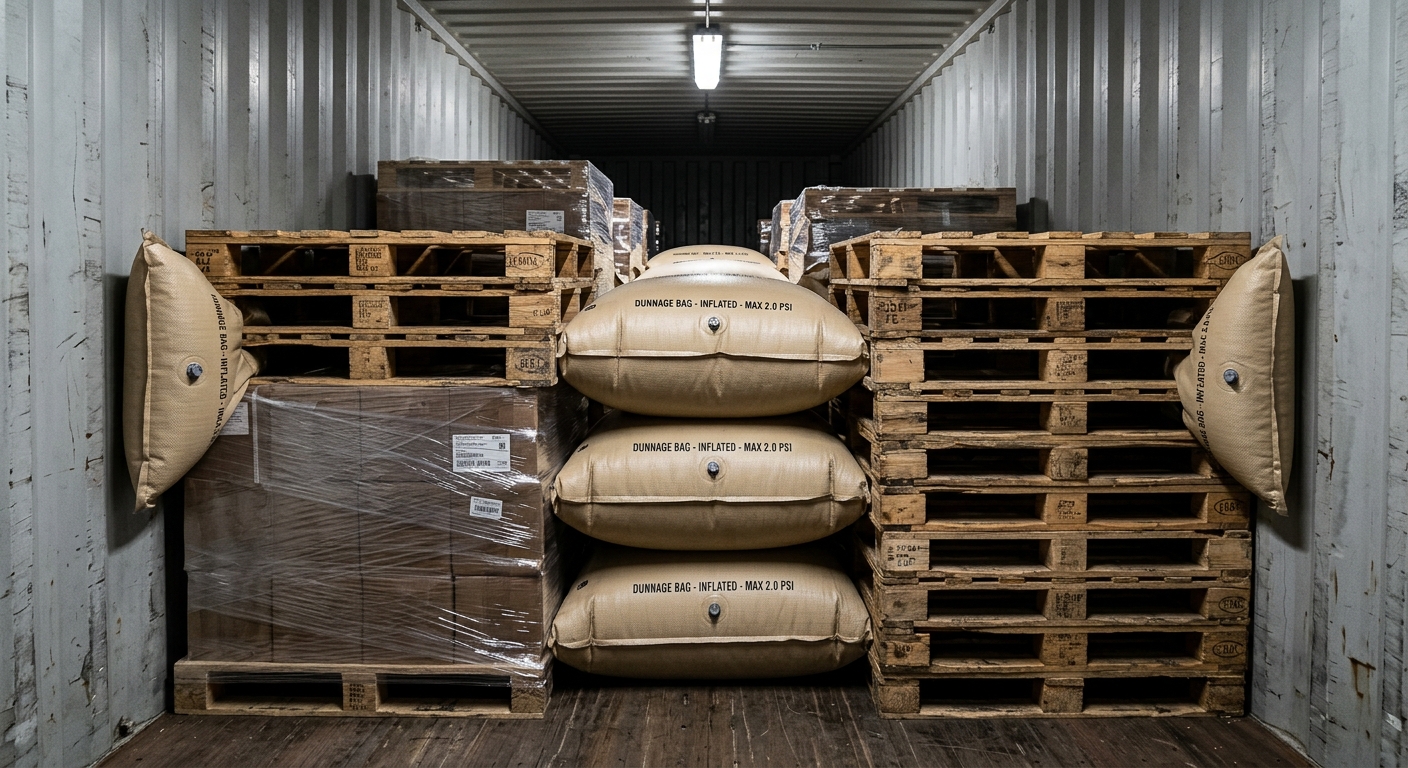
A container that isn’t braced properly turns into a battering ram at sea. Rough water and hard port handling can shift an unsecured load by half a meter or more, and when that happens against a container door, sheets crack, corners crush, and sometimes the whole stack topples.
The rule of thumb: if you can push a pallet by hand once it’s loaded, it’s not braced enough. Every void larger than a few centimeters is room for movement, and movement is what breaks sheets — not the weight itself.
Plywood is dense — a container of hardwood-core sheets can hit weight limits long before it hits volume limits. Overloading one end of the container to save loading time creates axle weight issues at the port and increases stress on bottom pallets, which can bow or crush under uneven pressure.
Standard 40ft containers max out around 26-28 tonnes payload depending on carrier. For heavy birch or LVL/LVB loads, weight often becomes the limiting factor before cubic space does — worth calculating both before committing to container count. Spreading weight evenly front-to-back and keeping heavier bundles low in the stack keeps the load balanced and reduces stress fractures on bottom sheets.
Film-faced plywood and decorative surfaces need more than corner guards — a single scuff on a formwork face or a birch veneer can drop the grade before it’s even used. Interleaving kraft paper between sheets prevents surface-to-surface friction damage during the vibration of transit.
For antislip and film-faced panels specifically, many exporters add a protective plastic film over the working face before palletizing — a small step that matters a lot once you’re comparing performance on the jobsite, as covered in Film-Faced vs. Antislip Plywood for Concrete Formwork. A damaged face coating on arrival can mean reduced formwork reuse cycles before you’ve even poured concrete once.
Most damage claims trace back to a step skipped in the final hour of loading, not a design flaw in the whole process. Before sealing the doors, confirm:
This is also the point where buyers should request loading photos from their supplier — a reputable exporter documents every stage and won’t hesitate to share them.
Even a well-loaded container can suffer damage from rough port handling outside your control. Document everything immediately: photos of the container seal number, the liner condition on opening, and any wet or crushed sheets before anything is moved. Insurance claims live and die on how fast and thoroughly this is documented.
Separately, inspect the unaffected portion of the load before accepting the full shipment — a partial rejection is far easier to negotiate than trying to claim after signing off on the whole container. Buyers sourcing bulk orders should build this inspection step into their standard receiving process regardless of how clean previous shipments have been.

How to Inspect Plywood Core Voids and Delamination Before Accepting a Bulk Order

Plywood Container Loading Guide: Moisture Protection, Palletizing, and Sheet Damage Prevention

Film-Faced vs. Antislip Plywood for Concrete Formwork: Which One Actually Lasts Longer?

Understanding Bond Line Strength: The Adhesive Science Behind Durable Plywood

Acoustic Wall Panels in Modern Office Fit-Outs: Design Choices That Pay Off

Anti-Slip Plywood for Campervan Flooring: Why Vehicle Builders Are Switching in 2026
Loading languages…